

Flame Retardant Chemicals In Mattresses – What to Know
More and more people are asking questions about what actually goes into their mattress, and rightfully so. You sleep on them every night, so knowing what is in it seems like a reasonable thing to expect. Flame retardants are one of the topics that comes up a lot, and there is a bit of confusion out there about what they are, why they are used, and whether you should be concerned. Here is everything you need to know.
Why flame retardants are often used in mattresses
The UK and Ireland feature some of the strictest fire safety regulations in the world when it comes to soft furnishings, and mattresses are no exception. Many beds, particularly those on the ‘lower-quality’ end of the scale, are crafted using cheaper materials such as foam, which is often petroleum-based. As a result, these mattresses need a flame retardant layer in order to avoid being a serious fire hazard, and adhere to safety regulations.The problem with chemical flame retardants in mattresses
The potential issue is that you spend a significant amount of your life in bed. This means that you are breathing in the air around your mattress for many hours every night, with your skin in contact with the material for hours at a time. Some flame retardant chemicals that were historically used have been associated in research with concerns including hormone disruption and other potential health effects. Many of these substances have since been restricted or banned.Do beds need to have flame-retardant chemicals?
No, beds don’t actually need to include flame-retardant (and potentially harmful) chemicals, particularly if the right materials are used. Natural fibres such as wool, cotton or cashmere have their own flame resistance. In particular, wool chars instead of burning when exposed to flame, and it self-extinguishes as opposed to spreading. As a result, a well-made mattress using natural fillings can meet fire safety standards without the need for chemical treatments. Premium mattress manufacturers have long used natural fillings as part of their approach to meeting fire safety standards.What chemicals should be avoided in mattresses?
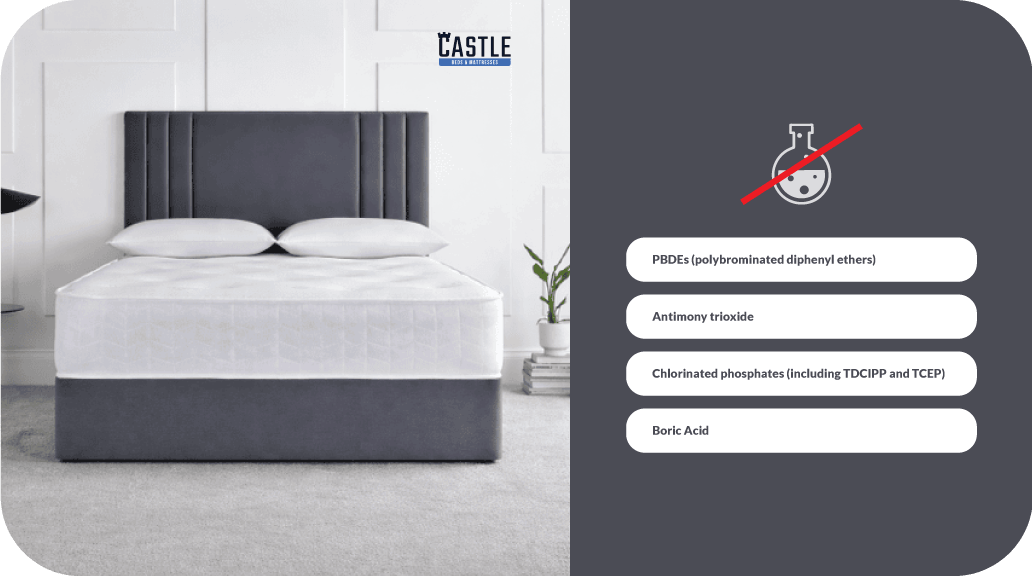
The most commonly flagged chemicals to be avoided in mattresses are:
- PBDEs (polybrominated diphenyl ethers) – Used widely in foam and fabric treatments for decades. They are now largely banned or heavily restricted in the UK and Ireland as evidence has linked them to thyroid disruption, cancer and developmental issues. Older mattresses manufactured before these restrictions may still contain them.
- Antimony trioxide – Antimony trioxide has historically been used in conjunction with some flame retardant systems and has been classified as a possible carcinogen.
- Chlorinated phosphates (including TDCIPP and TCEP) – These compounds are used in foam treatments and have been identified as known or possible carcinogens. TCEP has been restricted in children’s mattresses in many countries.
How do mattress manufacturers meet fire safety laws without using chemicals?
Meeting fire safety laws and regulations without using chemicals which are potentially harmful is all about materials. For example, a layer of wool between the mattress filling and the cover acts as a natural fire barrier, charring and slowing the spread of flame without any chemical treatment. Many premium mattress manufacturers use exactly this approach.Cotton and other natural fibres also contribute to fire resistance when used correctly, and high-quality ticking fabrics can be woven tightly enough to provide additional protection. The result is a mattress that passes the required safety tests, satisfies UK regulations and does not rely on a cocktail of synthetic chemicals to do it.
This is one of the reasons we’re proud to stock the Espoir collection, which uses generous layers of natural fillings including wool and cashmere to help meet fire safety standards.
How to choose a mattress with natural flame-resistant materials
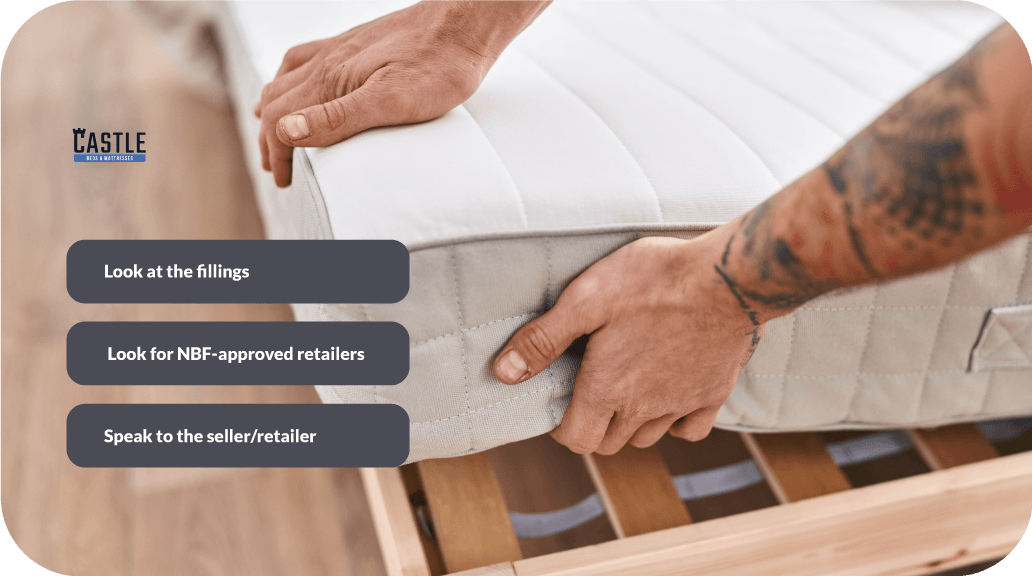
If you’re looking for a mattress made with more natural materials while still meeting UK fire safety standards, here are a few things to look out for:- The first step is to look at the fillings. Materials such as wool, cotton, cashmere and silk are naturally flame-resistant and don’t need to be chemically treated in the same way as synthetic foams. Our mattress buying guide goes into more detail on the different types of fillings and what they offer.
- Next, look for NBF-approved retailers. Castle Beds is an NBF Retail Champion, meaning the manufacturers we work with are vetted against strict UK industry standards for quality, safety and compliance.
- Then, speak to the seller/retailer about the fire safety approach used in their mattresses. They should be able to recommend a mattress that best suits your needs.
At Castle Beds, our selection of natural mattresses are suitable at a number of price and preference points. The Deep Sleep Wool Luxury 1500 is a great entry point if you want natural fillings without a premium price tag. For those looking to step up, the Espoir Natural Luxury 1000 is a great introduction to the Espoir collection.
It’s worth remembering that modern UK mattresses must comply with strict fire safety legislation, regardless of price. Many manufacturers now achieve these standards using a variety of approaches, and not all foam mattresses rely on the same flame retardant technologies. If you’re unsure about the materials used in a mattress, ask your retailer or manufacturer for more information.
To learn more about natural mattresses, get in touch with Castle Beds today.